Retro Loops: A Bold and Vibrant Font for Creative Expression
In the world of typography, fonts serve as more than just a means of communication—they are visual statements that can evoke emotion, convey tone, and shape identity. Among the many typefaces available, Retro Loops stands out as a distinctive choice that blends nostalgia with modern creativity. This decorative font is not just a design element; it's a tool that can transform text into a piece of art. Whether used in branding, digital media, or print, Retro Loops brings a unique flair that captures attention and adds personality to any project.
The appeal of Retro Loops lies in its ability to blend retro aesthetics with contemporary design sensibilities. Its loops, curves, and playful shapes give it a sense of movement and energy, making it ideal for projects that aim to stand out. Unlike traditional serif or sans-serif fonts, Retro Loops is not meant to be read in large blocks of text—it thrives in headlines, logos, and other prominent placements where visual impact is key.
The Characteristics of Retro Loops
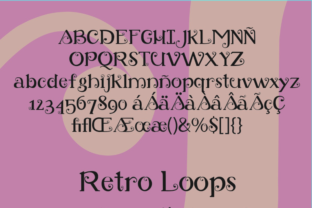
Retro Loops is characterized by its distinct looped letters, which give it a whimsical and dynamic appearance. These loops often extend beyond the baseline, creating a sense of motion and fluidity. The font also features exaggerated strokes and subtle variations in weight, adding depth and dimension to the text. These stylistic choices make it particularly effective for designs that require a sense of fun, creativity, or nostalgia.
One of the most notable aspects of Retro Loops is its versatility. While it is primarily associated with retro themes, its design elements allow it to be adapted to a wide range of contexts. For example, it can be used in modern branding to add a touch of playfulness or in vintage-themed projects to enhance authenticity. Its boldness makes it suitable for titles and headings, while its intricate details make it engaging for smaller text elements like captions or labels.
Applications of Retro Loops in Design
The use of Retro Loops extends beyond simple text formatting—it plays a crucial role in visual storytelling and brand identity. In the realm of graphic design, this font is often used to create eye-catching headlines for posters, advertisements, and social media content. Its vibrant character helps draw attention and communicate a specific mood or message. For instance, a music festival poster might use Retro Loops to convey excitement and energy, while a vintage clothing store might use it to evoke a sense of nostalgia.
In web design, Retro Loops can be employed to enhance user experience through visual hierarchy. When used effectively, it can guide users’ eyes toward important information, such as call-to-action buttons or featured content. However, it’s essential to balance its use with readability. Since the font is highly stylized, it may not be suitable for body text but can be an excellent choice for headers, subheadings, or decorative elements on a webpage.
Considerations for Using Retro Loops
While Retro Loops offers a unique aesthetic, its effectiveness depends on how it is applied. One key consideration is legibility. Due to its ornate design, the font may not be the best choice for long paragraphs of text. Instead, it works best when used sparingly and in conjunction with simpler fonts that provide contrast and clarity. Designers should also consider the context in which the font will be used—whether it aligns with the overall style and message of the project.
Another factor to keep in mind is accessibility. Fonts with complex shapes or irregular spacing can pose challenges for users with visual impairments. To ensure inclusivity, designers should test Retro Loops in different sizes and formats to confirm that it remains readable and functional across various platforms and devices.
Benefits of Incorporating Retro Loops in Projects
One of the primary benefits of using Retro Loops is its ability to differentiate a project from others. In a saturated market, standing out is essential, and this font provides a unique visual signature that can help brands or creators establish a memorable identity. Its distinctive style can also evoke emotional responses, making it a powerful tool for storytelling and audience engagement.
Additionally, Retro Loops can enhance the creative process by inspiring new ideas and approaches. Its playful nature encourages experimentation, allowing designers to explore unconventional layouts and compositions. This can lead to more innovative solutions and fresh perspectives in both digital and physical design projects.
Real-World Examples of Retro Loops in Action
Several real-world examples illustrate the effectiveness of Retro Loops in different contexts. For instance, a boutique coffee shop might use the font in its logo to create a warm, inviting atmosphere that reflects its artisanal approach. Similarly, a children’s book publisher could incorporate Retro Loops in its cover design to capture the imagination of young readers and add a sense of whimsy to the presentation.
In the realm of digital marketing, Retro Loops has been used in campaign visuals to create a nostalgic yet modern feel. A retro-themed product launch, for example, might feature the font in promotional materials to reinforce the theme and connect with audiences who appreciate vintage aesthetics.
Conclusion
Retro Loops is more than just a font—it’s a creative asset that can elevate the visual appeal of any project. Its unique characteristics, combined with its versatility and expressive potential, make it a valuable tool for designers, marketers, and content creators. By understanding its strengths and limitations, users can harness its power to craft compelling and memorable designs that resonate with their target audience.